
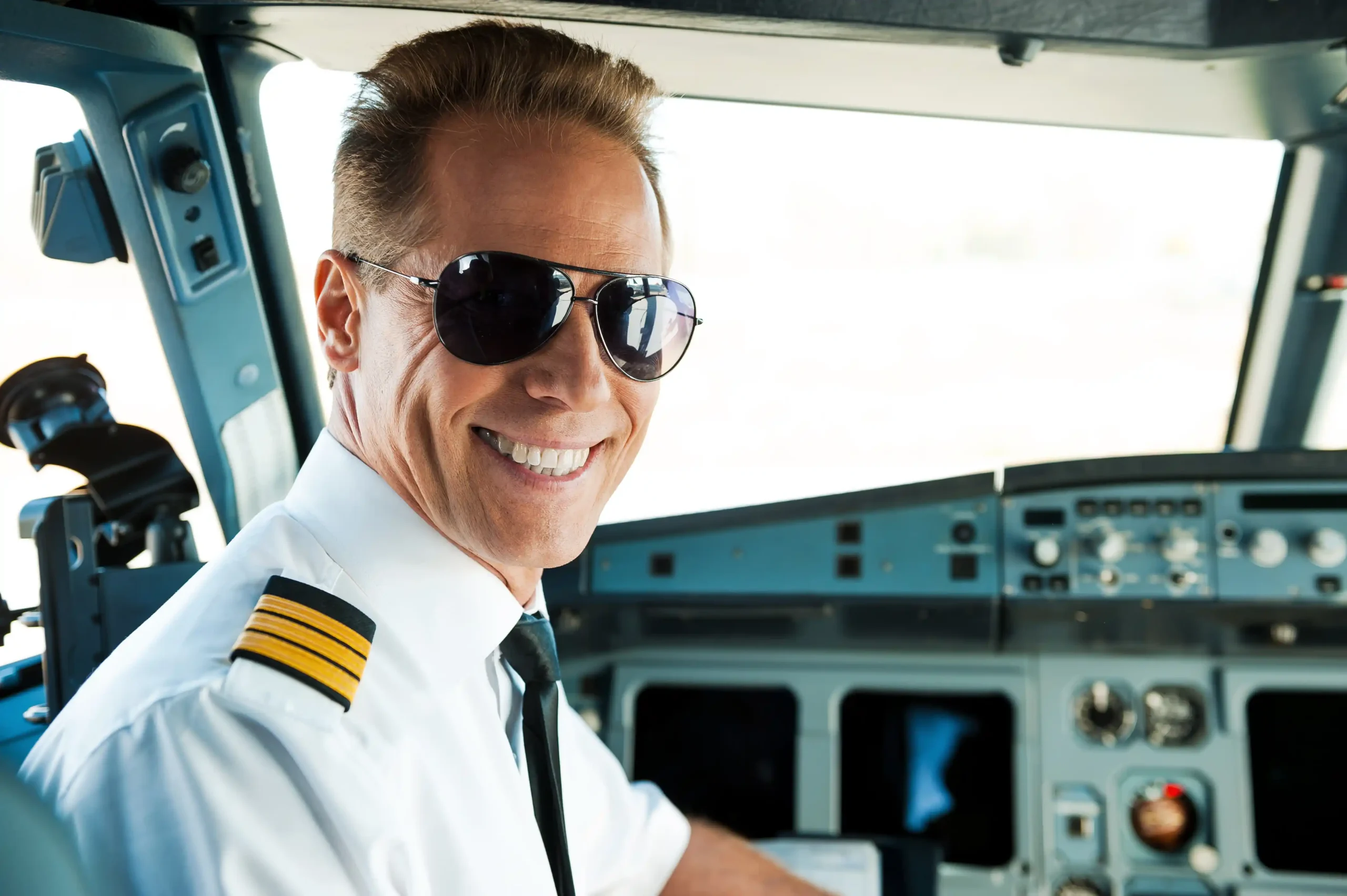
The right seat got you here. It will not get you through the left seat interview. A captain upgrade interview evaluates command authority, decisive judgment, and crew accountability, not the baseline competence your hire interview measured. To prepare, you have to stop presenting yourself as a strong crew member and start demonstrating you are ready to own the aircraft. Our pilot interview preparation team has coached this transition for years.
Why a Captain Upgrade Interview Is Fundamentally Different from Your Hire Interview
Quick Answer: Your hire interview proved you could safely operate as a crew member. Your upgrade interview tests whether you can carry final authority, and the evaluation criteria shift from competence to command.
When you interviewed for your regional or major carrier, the panel wanted to know you were trainable, safe, and a reasonable person to sit next to for four days. That bar assumed someone else held ultimate responsibility.
The captain upgrade interview removes that assumption. Evaluators now ask a harder question: when the plan falls apart and there is no one above you on the flight deck, do you make the call and own it?
Candidates who treat the first officer to captain interview like a repeat of their hire process underperform here. They rehearse the same TMAAT stories, lean on the same likable-teammate persona, and miss that the entire evaluation frame has moved.
Emerald Coast Interview Consulting has coached aviation professionals since 2002, and this mindset gap is the single most common reason strong first officers stumble in the airline captain upgrade process. Upgrade interviews have a meaningful failure rate, and most failures trace back to a candidate who never mentally left the right seat. The specific format varies between carriers, but the common evaluation themes hold across the industry.
What Interviewers Are Specifically Looking for in a Captain Candidate
Quick Answer: Upgrade evaluators look for command presence, decisive authority, crew accountability, and sound judgment under pressure. They want evidence you already think like a pilot in command, not a first officer waiting for direction.
The competencies that matter at upgrade differ from the ones that got you hired. You already have the ratings and the hours. Now the panel is measuring how you carry responsibility.
Evaluators at legacy and regional operators consistently probe:
- Command presence. Do you speak with the calm, direct clarity of someone used to being the final voice on the flight deck?
- Decisive authority. When you describe a difficult situation, did you make the decision, or did you wait for consensus?
- Crew accountability. Do you take ownership of outcomes for the entire crew, including cabin crew, not just your own actions?
- Judgment under pressure. Can you show a repeatable decision process, not just a lucky outcome?
The captain seat interview questions you face are designed to surface these traits through your stories. A common pattern in real evaluations: two candidates describe the same diversion, but one says “we decided to divert” while the other says “I made the call to divert and briefed the crew on my plan.” Same event, very different signal.
Command authority in the interview room is not about volume or bravado. Ownership is what matters. Every answer should make it obvious that you understand PIC authority as a personal responsibility you are ready to accept, not a title you are hoping to receive. Under 14 CFR 91.3, the pilot in command is directly responsible for, and the final authority as to, the operation of the aircraft. Your interview answers should reflect that you already understand what that regulation puts on your shoulders.
Leadership and Command Questions You Will Face
Quick Answer: Expect behavioral and scenario questions that probe your leadership history, how you handle crew conflict, and how you exercise PIC authority. These leadership questions for the airline pilot interview require examples where you led, not just participated.
Upgrade panels dig into your track record of influence and decision-making. The questions are aviation-grounded and specific, not generic management prompts.
Common categories of captain upgrade behavioral interview questions include:
- Exercising authority: “Tell me about a time you had to overrule another crew member’s plan.”
- Crew conflict: “Describe a situation where you disagreed with a captain about a safety-of-flight decision.”
- Leading under pressure: “Walk me through a time you managed a high-workload event and directed the crew.”
- Accountability: “Tell me about a decision you made that turned out to be wrong. What did you do?”
- Standards enforcement: “Have you ever had to address another pilot’s noncompliance with SOP?”
Notice how each of these demands that you occupy the leadership role in the story. The trap for first officers is answering command questions with follower examples. When asked how you led, do not describe how you supported a captain who led well.
These prompts follow the TMAAT format you already know, so the structure is familiar. The difference is content: your examples must place you in the decision-making seat. If you need to sharpen how you build these answers, our breakdown of behavioral interview questions using the STAR method covers the framework, and this article focuses on the upgrade-specific application of it.
The best answers show a decision, an action you personally directed, and a professional outcome. That is what separates a captain candidate from a well-liked first officer.
How to Talk About Your First Officer Experience as Leadership Evidence
Quick Answer: Mine your right-seat career for moments where you influenced outcomes, spoke up, or took operational ownership. Reframe first officer to captain interview answers around the judgment you exercised, not the title you held.
Here is the reframe that most candidates miss: you have been leading from the right seat for years. You just have not been describing it that way. Leadership is not defined by which seat you occupy. Shaping the outcome is what defines it.
Go back through your line experience and find the moments that already contain command behavior:
- Times you spoke up. Every instance where you challenged a captain’s decision or caught a developing error is CRM leadership. You influenced the flight deck.
- Times you owned a problem. Handling a mechanical, a passenger medical, or a weather diversion where you drove the coordination shows operational ownership.
- Times you mentored. Line-checking new hires, briefing a nervous first officer, or setting the tone on a hard trip is crew leadership behavior.
- Times you made the call the captain endorsed. When you proposed the plan and the captain agreed, you led. Frame it that way honestly.
Language is the key. Instead of “the captain and I decided,” say “I recommended we hold for the weather to clear, briefed my reasoning, and the captain agreed.” You are accurate and you are demonstrating command thinking.
Most preparation content ignores this gap. Reframing first officer experience as leadership evidence is not about inflating your role. Recognizing the authority you already exercised and describing it in captain-level terms is the goal. Your career is full of this evidence. Most candidates simply never learned to see it.
CRM at the Captain Level: The Accountability Shift
Quick Answer: At the captain level, CRM expands from managing your own contribution to owning the entire operation, including cabin crew, dispatch, and passenger safety. CRM captain evaluation at airlines measures whether you accept that expanded accountability.
As a first officer, CRM meant being an effective half of the flight deck: assertive when needed, supportive when appropriate, and always a backstop for the captain. As a captain, CRM means you are the integrator of the whole system.
That shift changes how you answer CRM questions. The captain is accountable for coordinating with the cabin crew during an irregular operation, communicating with dispatch on fuel and routing decisions, and making the final passenger-safety call. Your answers need to reflect that wider span of responsibility.
Consider how major carriers actually run operations. When a flight faces a threat, the captain synthesizes inputs from the first officer, the flight attendants, dispatch, maintenance, and ATC, then decides. In your responses, show that you understand how to gather those inputs efficiently and still own the outcome. The FAA formalizes these expectations through Crew Resource Management training standards, described in FAA Advisory Circular 120-51E, which frames CRM as the effective use of all available resources by the flight crew.
A strong CRM captain answer includes:
- Actively soliciting input from the crew before deciding
- Making a clear decision and communicating it plainly
- Assigning responsibilities across the whole crew, not just the flight deck
- Taking accountability for the result regardless of how it turned out
If you want to go deeper on this competency, our resource on how airlines assess CRM and crew leadership in pilot selection breaks down what evaluators score. The through-line for upgrade is simple: a captain does not just contribute to good CRM. A captain is responsible for it.
Common Mistakes First Officers Make in Captain Upgrade Interviews
Quick Answer: The most damaging mistake is using deference language and shared-decision framing that reveals you still think like a first officer. Captain upgrade behavioral interview success depends on committing fully to the command role in every answer.
These patterns quietly signal to a panel that a candidate is not ready, even when their flying is excellent. Our coaching staff, who bring direct airline interview experience, see the same failure modes repeat. That inside perspective matters, because these signals are read from the evaluator’s seat, not the candidate’s.
Watch for these specific mistakes:
- Deference language. Constantly saying “the captain decided” or “I deferred to the captain” in stories where you should be showing your own judgment.
- Shared-decision hedging. Framing every choice as “we decided together” so you never have to own a call. Captains own calls.
- Follower examples for leadership questions. Answering a command prompt with a story about supporting someone else’s command.
- Avoiding the hard decision. Choosing safe stories where nothing went wrong, which gives the panel no evidence of judgment under pressure.
- Talking about the role in the future tense. Saying what you “would do” as a captain instead of what you have already done that proves you are ready.
The root cause is almost always the same: the candidate has not mentally committed to being a captain. They still see themselves as a first officer hoping for approval. Panels read that instantly.
For a broader look at these patterns, our piece on the most common mistakes pilots make in interviews is worth reviewing before your upgrade board. Fixing the mindset fixes most of the language automatically.
Preparing Efficiently If Your Upgrade Window Is Short
Quick Answer: If your upgrade interview is close, prioritize reframing your best stories into command examples, rehearsing decisive language out loud, and running mock scenarios. These three activities deliver the highest return in limited time.
Short timelines are common. You get the notification, and the board is weeks away. Focus your limited hours on what moves the needle most, not on rereading material you already know.
Here is a prioritized prep plan:
- Audit your stories first. List your five strongest examples and rewrite each so you are the decision-maker. This is the single highest-value activity because it fixes the mindset problem directly.
- Rehearse out loud, not in your head. Deference language slips out under pressure. Practicing aloud trains you to say “I decided” and “I directed” naturally.
- Run realistic mock scenarios. Pressure-testing your answers with someone who understands captain-level evaluation exposes the follower framing you cannot see in yourself.
- Review CRM and PIC authority prompts. Make sure your answers reflect ownership of the whole crew and operation.
- Refine command presence last. Once your content is right, polish the calm, direct delivery a captain projects.
Structured, aviation-specific preparation beats generic interview coaching here because your problem is not interview technique in general. Your challenge is the specific FO-to-captain transition. Emerald Coast Interview Consulting builds programs around exactly this kind of targeted work, drawing on more than two decades serving aviation professionals and coaching a large number of pilots through airline interviews.
Ready to walk into your upgrade board thinking and speaking like a captain? Contact Emerald Coast Interview Consulting to learn more about our aviation-specific interview preparation, or call +1 888-505-3242. Our programs are backed by a money-back guarantee, so the financial risk of getting started is reduced. We have helped pilots prepare for airline interviews since 2002, and we stand behind the quality of the preparation we deliver.
Frequently Asked Questions
What do airlines ask in a captain upgrade interview?
Airlines focus on behavioral and scenario questions designed to reveal how you exercise command authority, resolve crew conflict, and take accountability for outcomes. Expect prompts like “Tell me about a time you overruled another crew member” or “Describe a decision you made that turned out wrong and how you handled it.” Many questions probe how you would coordinate with cabin crew, dispatch, and ATC during irregular operations. The goal is to confirm you already think and act like a pilot in command, not a first officer awaiting direction.
How is a captain upgrade interview different from an initial hire interview?
Your hire interview measured whether you were safe, trainable, and a reasonable person to fly with, all under the assumption that someone else held final authority. The upgrade interview removes that assumption and tests whether you can carry ultimate responsibility for the aircraft and crew. The evaluation shifts from baseline competence to command presence, decisive judgment, and ownership of outcomes. Candidates who recycle the same stories and likable-teammate persona from their hire interview typically underperform because the entire frame has changed.
What leadership examples should I have ready for a captain upgrade interview?
Prepare examples where you personally drove the outcome rather than supported someone else’s decision. Strong material includes times you spoke up or challenged a captain’s plan, owned a mechanical or medical event, mentored newer pilots, or proposed a plan the captain endorsed. Frame each story around the judgment you exercised, using language like “I recommended” and “I decided” rather than “we decided together.” Aim for five polished examples that clearly place you in the decision-making seat.
How do I demonstrate command authority in an interview setting?
Command authority comes across through ownership, not volume or bravado. Speak with calm, direct clarity and make it obvious in every answer that you made the call and accepted responsibility for the result. Avoid deference language and shared-decision hedging that signals you still think like a first officer. Show that you understand the personal accountability 14 CFR 91.3 places on the pilot in command, and describe decisions in terms of what you already did rather than what you would do someday.
Do I need a coach for a captain upgrade interview if I already got hired?
Getting hired proves you can interview as a crew member, but the upgrade board evaluates a different skill set entirely. Many strong pilots struggle to see the follower framing in their own answers, which is exactly the pattern that costs candidates the left seat. A coach with airline evaluation experience can expose that blind spot, help you reframe your stories into command examples, and pressure-test your delivery. Aviation-specific coaching targets the FO-to-captain transition directly, which generic interview help cannot.
How long should I spend preparing for a captain upgrade interview?
The right amount depends less on total hours and more on how you spend them. If your board is weeks away, concentrate on auditing your five best stories into command examples, rehearsing decisive language out loud, and running realistic mock scenarios. These activities deliver the highest return because they fix the mindset problem that causes most failures. Even a short window is enough if you prioritize reframing and repetition over rereading material you already know.
What CRM scenarios come up in captain upgrade interviews?
CRM scenarios at the captain level test whether you can own the entire operation, not just your own contribution. Expect situations involving irregular operations, weather diversions, mechanical issues, or medical events where you must coordinate with cabin crew, dispatch, maintenance, and ATC. Evaluators want to see you solicit input from the crew, make a clear decision, assign responsibilities across the whole team, and accept accountability for the result. The key difference from a first officer CRM answer is that you are the integrator who synthesizes every input and then decides.
